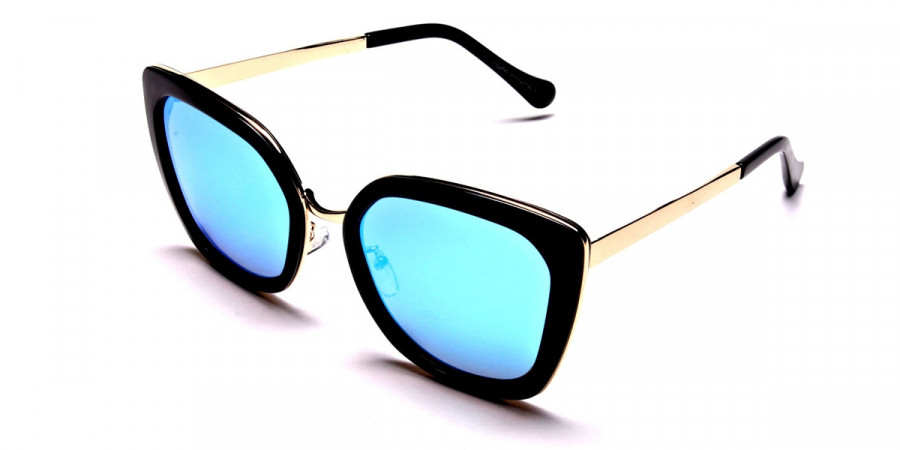
Which glasses tints are perfect for you?

Shopping for glasses online may have made things convenient, but there are a lot more decisions to make now! From frame colour, shape and size to lens tints now, there is a whole host of options. Choosing the perfect pair of glasses involves factors like your preference, face shape, lifestyle, personality, etc. 

When it comes to picking among different glasses tints, there are a few more things to consider. Whether you are going for sunglasses or adding tints to prescription glasses, they can add some serious style to your look. Apart from being a style preference, tints also affect the visual acuity a great deal. So it is about both – how well you see and how good you look! 

Let us go over the different tints available, and what is so special about each of them. 

Grey lenses

The most popular tint, it helps in dulling bright glare, but is not dark enough to lower quality of vision. The neutral shade makes it appropriate for both sunny and overcast days. You will see the truest colours of the outside word in grey lenses. 

Brown lenses

Brown is a pretty safe choice like the classic black in frames. In a nod to vintage 70s style, they are best paired with aviators. It provides a decent visual contrast in overcast conditions as well. You can expect a good performance when it is snowing as well. Perfect for a day of golf! 

Green lenses

Green tints are as good a fashion choice as a safety one. They block a good amount of blue light which improves contrast. They are well suited for a sunny day out, especially if you are playing outdoor games. They will also help reduce eye strain. 

Yellow lenses 

Yellow tinted sunglasses have been worn by bird shooters since ages. This is because they are great at blocking blue light and improving contrast and visual clarity. Yellow or amber lenses also help avoid eyestrain if you use computer screens or look at a digital screen for hours on end. Thus they are appropriate for indoor use as digital eye strain glasses as well, but not if you work in low light conditions.   

Red lenses 

These are perfect for snowy conditions. Rose tinted lenses help with brightness and can reduce glare from snow or a water body. 

Blue lenses 

They provide good visibility while looking ultra fashionable! They are the best choice if you are over exposed to yellow light. Do not confuse these with blue light glasses, which have a special coating on their lenses to block harmful blue light. 

This light is a part of natural light wavelength, which regulates our circadian rhythm. It is also emitted by digital device screens like phones and computers, and overexposure to it can lead to eye strains, headaches and fatigue among other conditions. 

Which lenses are right for you? 

Before you choose a specific tint, ask yourself the following questions – 

  • Is your work mostly indoors or outdoors?
  • How are the weather conditions where you live? 
  • Do you have trouble sleeping at night?
  • What are your leisure activities?
  • Do you look at digital screens a lot (phone, laptop, TV, computer, tablets, etc.)?
  • Do you require great visual contrast? 
  • Is glare off wet roads, billboards, street lights, etc. a problem for you?

Apart from the lens colour, you can also choose between solid tints, graduated tints and mirrored lenses. Each of them has their own set of benefits. In case you are wondering how mirrored tints help, here are its advantages – 

  • Block glare – Mirrored sunglasses are great at blocking glare, so no matter which colour tint you like, you can wear them in bright conditions with ease. 
  • Cool eyewear – Mirrored lenses are undeniably cool! 
  • Maintain anonymity – They are great if you don’t want to show your eyes or want to maintain an air of anonymity. 

What happens when you wear wrong prescription glasses

Wearing glasses has become normal. Where most people wear them to see clearly, there are people who like the fashion appeal that this accessory gives. 

If you are from the latter category, you need to choose frames that suit your face shape, skin tone, hair colour and personal style. For example, cat eye women’s glasses for a round face. But, if you are someone who wears vision correction glasses, you need to make sure that you have the right prescription. 

People with refractive errors are required to use glasses for vision clarity. Whether you are buying your first or fifth pair, make sure you buy glasses with the right prescription.

Your ophthalmologists or optometrists are only human. It is quite normal to make mistakes no matter how long you have been into your practice. 

Signs that your prescription is wrong

Our vision changes throughout our lives. If you want to give up your old prescription glasses, make sure you visit your eye doctor to know if your optical power has changed. Although using wrong prescription glasses won’t cause any severe damage to your eyes, it can invite some visual and physical discomforts which are not worth suffering through. 

Headache, nausea, dizziness or vertigo are some unpleasant side effects of using wrong glasses for your particular eye problem. Even when you order glasses online, be extra careful and enter the right prescription along with other useful information such as pupillary distance. 

You don’t have to make a trip to your eye doctor to know if you are using the correct prescription, your eyes will let you know. However, if you are not accustomed to glasses or your prescription has recently changed, feeling dizzy is normal. Where some people take  2 to 3 days to adapt to their new spectacles, others might take up to two weeks. 

Types of refractive errors

Different refractive errors target different parts of your eyes. Here are some vision problems that one can develop.

1. Myopia or Nearsightedness

In myopia, the length of the eyeball is longer than usual which causes the light to refract in front of the retina rather than focusing on the retina. People who are myopic are able to see close objects clearly but have a blurred vision when trying to spot distant objects.

If you have myopia, you can wear single vision lenses to get a clearer view at distance. Prescription eyeglasses are generally costly as they have specialised lenses with different focal powers. If money is a constraint for you, buy online glasses at affordable prices without going low on the quality.  

2. Hyperopia or Farsightedness

Contrary to myopia, hyperopia occurs when the eyeball is too short that the light is focused behind the retina causing the eyes to lose their near focal ability. However, hyperopia is not the same for everyone. For example, sometimes the distant objects can be viewed clearly while other times people may have blurred distant vision. 

Even if you have a 20/20 vision, you might want to consider wearing non-prescription glasses with protective coatings such as Anti-UV, Anti-Glare and Anti-Scratch. At Specscart, you will get these coatings for free on every pair of glasses that you buy.

3. Astigmatism

Astigmatism can be resulted from an oddly-shaped cornea. When your cornea is not round but rather shaped like a football, the light gets focused in front or behind the retina and thus your vision becomes blurry at any distance. People with astigmatism generally have distorted vision at every distance including near, intermediate and far. If you are a man with astigmatism and above 40, your eye doctor will most probably recommend men’s glasses with bifocal lenses to work on your vision difficulties. 

4. Presbyopia

It is an age-related problem in which the crystalline lenses inside your eyes start to lose flexibility and become incapable of focusing on nearby objects properly. 

People often confuse presbyopia with hyperopia but they are not the same. High hyperopia may even cause your eyes to have blurred vision when looking at far distances. In such a case, people with hyperopia will benefit from varifocal glasses that will give them vision clarity at all distances.

Side effects of wrong prescription 

It becomes important to not only identify your particular eye problem but to also figure out the magnification strength or optical power you will need for your glasses. 

When you have given an eye test, your optometrist will give you the latest prescription so you can get your lenses made or order glasses online using the right prescription. The correct optical power will work on your specific vision problem so the things around you are not a blurry mess.

However, if you act careless and buy glasses without consulting your eye doctor, these are the side effects that might come your way.

1. Headache

Have you ever worn somebody’s glasses and had a headache?

Excruciating pain in your head and eyes are the most common signs that must alarm you to check your prescription glasses. If you have frequent headaches for some days after you have started wearing your new eyeglasses, it is time to make a trip to your optometrist.

Your eyes work hard to adapt to a new prescription and when the prescription is wrong, they will work extra hard and wear themselves out in the process.

2. Vertigo

Vertigo is not just dizziness. It is the feeling of dizziness that does not go even when you lie down. Blurred vision is also a cause of vertigo but wearing glasses with the wrong prescription will make the situation only worse. 

If you don’t have vertigo or if it has become worse with your new glasses, see your doctor and get your prescription fixed. 

3. Blurred vision

When your optical power is off even a few degrees, you might have blurry vision. However, blurriness can also occur while adjusting to a new pair of frames. If the situation remains the same even after two weeks, it’s most likely that you are wearing wrong glasses.

The Final Word

We trust our optometrists but they can also make mistakes while taking your eye measurements leaving you with the wrong prescription. The next time you visit your eye doctor, make sure to notice how well you are able to see after your glasses fitting. If you like to buy online glasses, pay close attention to the prescription as well as the fitting. 

 Your eyes have a way of telling you that something is wrong with your optic health. If you have any questions about your vision difficulties, talk them out with your eye doctor or optometrist.