

5 ways to avoid your glasses from fogging up
So you have just bought a pair of designer glasses online that match your outfit and as you step out of your house and put on your mask, your lenses become foggy.
Wearing masks is not a choice, it is the need of the hour. While many people still feel the discomfort of wearing face covers, it is a different struggle altogether for eyeglass wearers, isn’t it?
As much as it is important that we cover our face in public, people with glasses find it even more difficult as the lenses get fogged up causing clouded vision.
The face mask does not give an outlet to your warm breath which causes the hot air to escape from the gap between your mask and your nose leading to misted up lenses. Being an eyewearer myself, I know how frustrating it can be.
If you are also fed up of wiping off your glasses and fixing them again and again as the moisture causes them to slip-off your nose, I have got some tricks up my sleeve that you can try as well. We all want to be safe but that does not mean that we have to give up our comfort.
Here are some tips to keep your glasses fog-free even when you’re wearing a mask:
1. Use masks with a nose bridge
If your mask is loose on your nose, there will be enough gap for your breath to escape upwards to your glasses. Buy masks that have flexible nose bridges so they fit firmly on your nose.
It will prevent your breath from reaching your lenses while also giving you a better protective gear.
2. Use soap and water
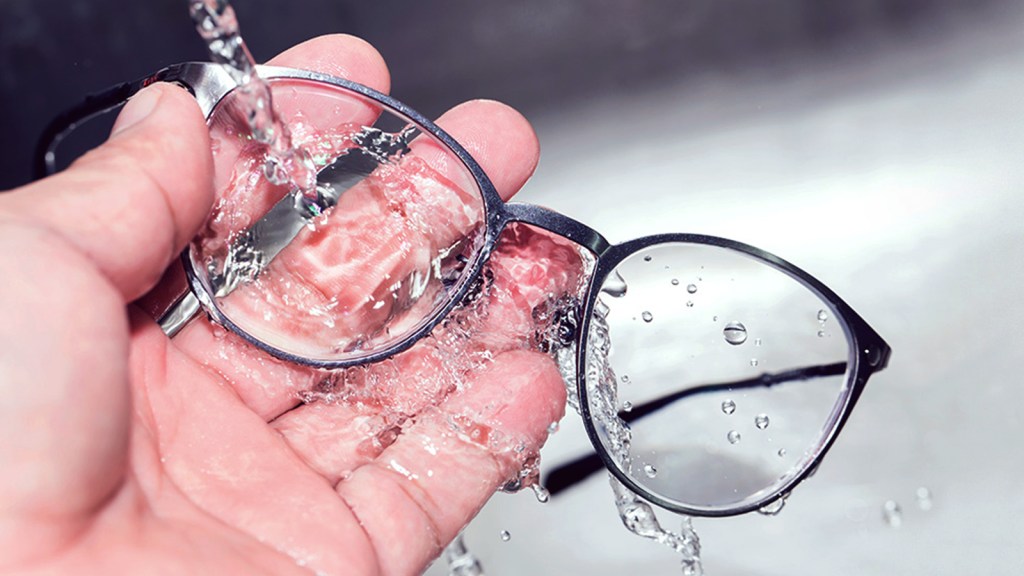
The solution to foggy glasses doesn’t get any simpler. Before you put on your eyewear, wash the lenses with soapy water and wipe away the excess moisture. Clean the lenses with a microfiber cloth or let them air dry.
Washing your lenses with soapy water will leave a thin film on them that will prevent water molecules to form on their surface.
3. Tighten your mask with ear loops
You don’t have to buy a tight fitting mask, you can simply adjust it as per the width of your face. If the ear loops are too big, twist them forming an ‘X’ shape and then put on the mask. There are also self-tying face masks that you can adjust yourself so that they fit close to your face. But do not tie it so hard that it causes redness behind your ears.
4. Secure your glasses
It is really annoying when our eyeglasses slip down our nose due to moisture. And the rush to sanitize your hands first before you secure your frames back again is a whole different story. Let me tell you how you can avoid this situation. How about you wrap the strings of your masks around your frame’s temples?
If your frames are constantly slipping down, it could be that they are slightly bigger for your face. Wearing glasses that sit perfectly on your face will keep you away from this trouble. If you have been sporting the same frame for a long time and want a new one, you can buy glasses online to save the cost and choose from a wide variety of frame shapes and designs. Or, if you want to make do with the existing pair, go to your local optician and have it fixed.
5. Breathe downward
You won’t have to readjust your mask everytime if you change your breathing habit. To keep your glasses from fogging up, you can try breathing out downwards – Let me tell you how. Keep your upper lip over the lower lip and then exhale.
It might seem awkward at first, but once you know how to do it right, it is one of the easiest solutions to keep your lenses moisture-free.

 fashion is for eyes
You must be logged in to post a comment.