How do glasses improve your vision?

Your glasses can be of mystery. It’s tough to trust something that you aren’t familiar with for your vision correction. Isn’t it? But believe us, the benefits of wearing glasses are limitless. You can correct your vision and prevent yourself from getting blind. 

Plus, now that the new prescription glasses online are coming with UV-blocking coating, you can also protect your eyes from ultraviolet (UV) light. Plus, the cost and maintenance of these glasses are reasonable. Coming back to your question, how do glasses improve our eyesight? Let’s get right into it. 

Does wearing glasses improve eyesight?

Yes, most definitely. Glasses are solely created to improve people’s eyesight. We can’t possibly improve our vision without glasses, although adopting some healthier habits can prevent potential harm but reversing vision changes is simply impossible. 

To fix vision issues, we need to alter the physical eyes which is only possible via surgical procedures. For instance, if you have a problem with seeing things at a long distance, your cornea has a limited carving pattern that keeps your eyes from refractive light at the correct level. Unless you’ve grown out of your refractive error, the only way to fix such an eye condition is to adjust the curve. 

Glasses, on the other hand, help to improve your vision by magnifying the field of view to help you see things easily, without having to alter the eye’s physical condition. Glasses provide your eyes with the best visual acuity, at least while you are wearing corrective eyewear. 

Glasses aren’t of one type that corrects people’s vision, each lens comes with distinctive vision correction based on the person’s prescription. WIthout eyeglasses, your vision continues to deteriorate while you struggle with your vision. 

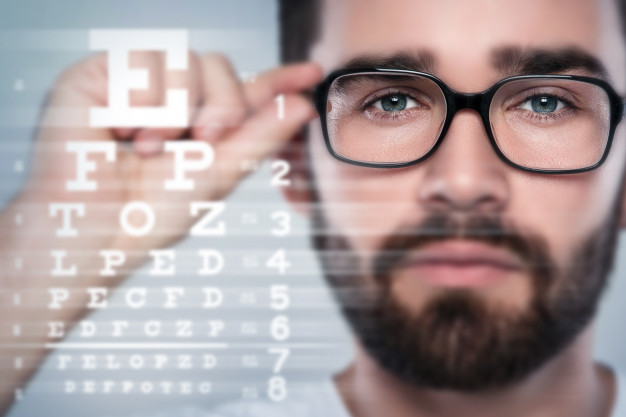
The 20/20 vision is a standard measure that means having good visual acuity which glasses can provide for your eyes. For instance, if you have 20/70 to 20/160 vision which is quite low, but can be corrected to 20/20 using special lenses. All the glasses frames for men and women are available for all eye problems and age. As we get older, our eyesight is bound to weaken due to a natural eye-ageing condition, called presbyopia. Regular eye tests can help you identify the eye problems before it turns extremely severe. 

What eye problems make people wear glasses?

There are different reasons while optometrists prescribe people glasses. As of now, blue light protection, Hyperion, astigmatism and myopia is one of the most common. 

Blue light filter – With more and more integration of technology in the workplace and personal life, computer vision syndrome is at an all-time high. CVS occurs due to excessive screen time resulting in numerous eye problems and discomforts like itchiness, burning sensation, blurry vision, headache, red-eyes and others. These problems are certainly felt by most of the population across the world while we continue to scroll through our smartphones. There are ways we can prevent computer vision syndrome – stop using technology, or wear blue light blocking glasses. 

At Least one of these sounds like a feasible solution. People with more than 5 to 6 hours of screen time are strictly advised to wear blue light glasses. A study published in Investigative Ophthalmology and Visual Science proved blue light glasses to be extremely effective. You can get these blue light filters on both prescription and non-prescription online glasses frames. 

Myopia 

Myopia or nearsightedness is one of the most common eye problems that require wearing eyeglasses. This particular eye condition is a result of either the eyeball being shaped too long or the cornea not being curved enough. Myopia makes it difficult for people to see distant objects. 

There are a range of designer glasses online that correct myopia, but there aren’t any long-term cures. Glasses help to prevent your myopic eyesight from deteriorating while also correcting your present eyesight. 

Hyperopia 

Hyperopia or farsightedness is another eye condition that requires glasses. It’s an eye condition that’s opposite to myopia. Instead of not seeing distant objects, hyperopic eyes aren’t able to see nearby objects. It often causes a struggle in seeing objects like your smartphone, book, or restaurant menu. 

Reading glasses helps to correct hyperopia. Besides, farsighted people often choose cheap readers to correct rather than getting a comprehend eye test. Skipping eye exams leaves a catastrophic effect on our eye health, so we strongly recommended buying reading glasses based on the prescription given to you by your optometrist.

As mentioned in Harvard Health Publishing, an annual comprehensive eye test helps to prevent numerous eye diseases than any expensive treatment. Specscart, the Manchester-based startup offers FREE eye tests for everyone at their Bury and Walkden store, so go ahead and get your eyes examined. 

Astigmatism

One of the most common yet misunderstood eye conditions that require different types of eyeglasses is astigmatism. In simpler terms, astigmatism is a result of the irregular shape of the eye’s cornea or the lens. 

When the irregularity occurs, it affects the way light is refracted into our eyes, preventing us from seeing clearly. Researchers aren’t yet sure what exactly causes astigmatism, beyond the genetic factor. Astigmatism often results in blurry and distorted vision. 

Astigmatism as well is corrected using prescription glasses for women and men.

Where can you buy glasses?

Now that you know the importance of glasses in vision correction, where can you find the best place to buy one? Specscart, your one-stop-shop for all eyewear needs, from same day delivery to high-quality designer glasses, all at one simple place.

Specscart offers premium eyewear made out of cellulose acetate, metal and wood with their Manchester-based state-of-the-art laboratory-made lenses. Starting at only £29.9, all of Specscart glasses come fully-loaded with anti-glare, anti-UV and anti-scratch coating. Go ahead and get yourself the best-designed glasses at the most affordable range.
What happens when you wear wrong prescription glasses

Wearing glasses has become normal. Where most people wear them to see clearly, there are people who like the fashion appeal that this accessory gives. 

If you are from the latter category, you need to choose frames that suit your face shape, skin tone, hair colour and personal style. For example, cat eye women’s glasses for a round face. But, if you are someone who wears vision correction glasses, you need to make sure that you have the right prescription. 

People with refractive errors are required to use glasses for vision clarity. Whether you are buying your first or fifth pair, make sure you buy glasses with the right prescription.

Your ophthalmologists or optometrists are only human. It is quite normal to make mistakes no matter how long you have been into your practice. 

Signs that your prescription is wrong

Our vision changes throughout our lives. If you want to give up your old prescription glasses, make sure you visit your eye doctor to know if your optical power has changed. Although using wrong prescription glasses won’t cause any severe damage to your eyes, it can invite some visual and physical discomforts which are not worth suffering through. 

Headache, nausea, dizziness or vertigo are some unpleasant side effects of using wrong glasses for your particular eye problem. Even when you order glasses online, be extra careful and enter the right prescription along with other useful information such as pupillary distance. 

You don’t have to make a trip to your eye doctor to know if you are using the correct prescription, your eyes will let you know. However, if you are not accustomed to glasses or your prescription has recently changed, feeling dizzy is normal. Where some people take  2 to 3 days to adapt to their new spectacles, others might take up to two weeks. 

Types of refractive errors

Different refractive errors target different parts of your eyes. Here are some vision problems that one can develop.

1. Myopia or Nearsightedness

In myopia, the length of the eyeball is longer than usual which causes the light to refract in front of the retina rather than focusing on the retina. People who are myopic are able to see close objects clearly but have a blurred vision when trying to spot distant objects.

If you have myopia, you can wear single vision lenses to get a clearer view at distance. Prescription eyeglasses are generally costly as they have specialised lenses with different focal powers. If money is a constraint for you, buy online glasses at affordable prices without going low on the quality.  

2. Hyperopia or Farsightedness

Contrary to myopia, hyperopia occurs when the eyeball is too short that the light is focused behind the retina causing the eyes to lose their near focal ability. However, hyperopia is not the same for everyone. For example, sometimes the distant objects can be viewed clearly while other times people may have blurred distant vision. 

Even if you have a 20/20 vision, you might want to consider wearing non-prescription glasses with protective coatings such as Anti-UV, Anti-Glare and Anti-Scratch. At Specscart, you will get these coatings for free on every pair of glasses that you buy.

3. Astigmatism

Astigmatism can be resulted from an oddly-shaped cornea. When your cornea is not round but rather shaped like a football, the light gets focused in front or behind the retina and thus your vision becomes blurry at any distance. People with astigmatism generally have distorted vision at every distance including near, intermediate and far. If you are a man with astigmatism and above 40, your eye doctor will most probably recommend men’s glasses with bifocal lenses to work on your vision difficulties. 

4. Presbyopia

It is an age-related problem in which the crystalline lenses inside your eyes start to lose flexibility and become incapable of focusing on nearby objects properly. 

People often confuse presbyopia with hyperopia but they are not the same. High hyperopia may even cause your eyes to have blurred vision when looking at far distances. In such a case, people with hyperopia will benefit from varifocal glasses that will give them vision clarity at all distances.

Side effects of wrong prescription 

It becomes important to not only identify your particular eye problem but to also figure out the magnification strength or optical power you will need for your glasses. 

When you have given an eye test, your optometrist will give you the latest prescription so you can get your lenses made or order glasses online using the right prescription. The correct optical power will work on your specific vision problem so the things around you are not a blurry mess.

However, if you act careless and buy glasses without consulting your eye doctor, these are the side effects that might come your way.

1. Headache

Have you ever worn somebody’s glasses and had a headache?

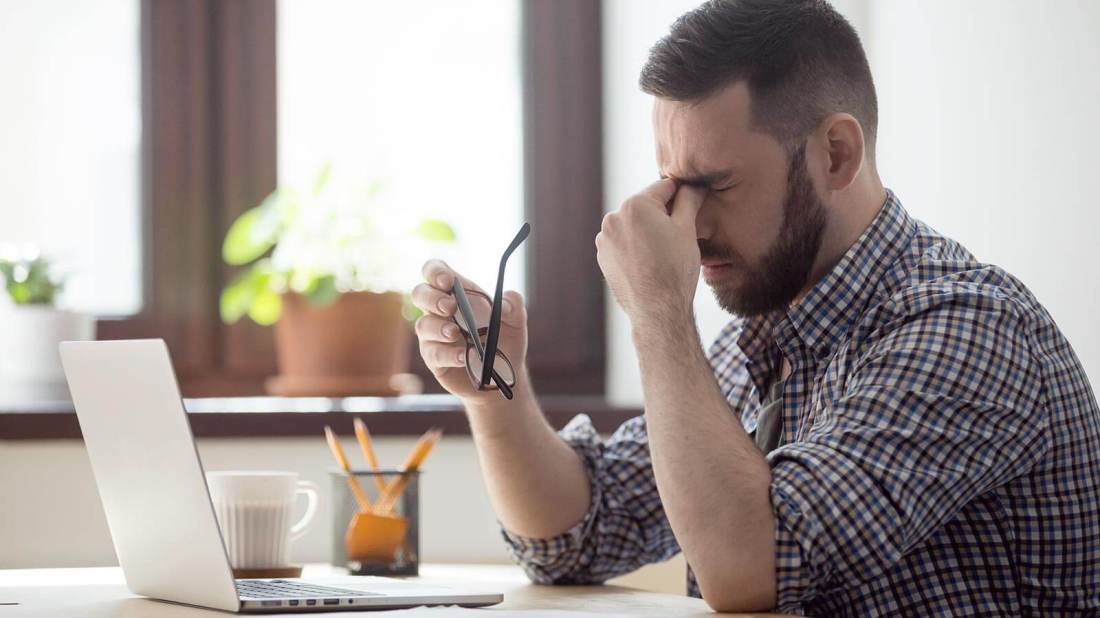
Excruciating pain in your head and eyes are the most common signs that must alarm you to check your prescription glasses. If you have frequent headaches for some days after you have started wearing your new eyeglasses, it is time to make a trip to your optometrist.

Your eyes work hard to adapt to a new prescription and when the prescription is wrong, they will work extra hard and wear themselves out in the process.

2. Vertigo

Vertigo is not just dizziness. It is the feeling of dizziness that does not go even when you lie down. Blurred vision is also a cause of vertigo but wearing glasses with the wrong prescription will make the situation only worse. 

If you don’t have vertigo or if it has become worse with your new glasses, see your doctor and get your prescription fixed. 

3. Blurred vision

When your optical power is off even a few degrees, you might have blurry vision. However, blurriness can also occur while adjusting to a new pair of frames. If the situation remains the same even after two weeks, it’s most likely that you are wearing wrong glasses.

The Final Word

We trust our optometrists but they can also make mistakes while taking your eye measurements leaving you with the wrong prescription. The next time you visit your eye doctor, make sure to notice how well you are able to see after your glasses fitting. If you like to buy online glasses, pay close attention to the prescription as well as the fitting. 

 Your eyes have a way of telling you that something is wrong with your optic health. If you have any questions about your vision difficulties, talk them out with your eye doctor or optometrist.

How to stop your glasses from fogging up when you are wearing a mask

5 ways to avoid your glasses from fogging up

So you have just bought a pair of designer glasses online that match your outfit and as you step out of your house and put on your mask, your lenses become foggy. 

Wearing masks is not a choice, it is the need of the hour. While many people still feel the discomfort of wearing face covers, it is a different struggle altogether for eyeglass wearers, isn’t it?

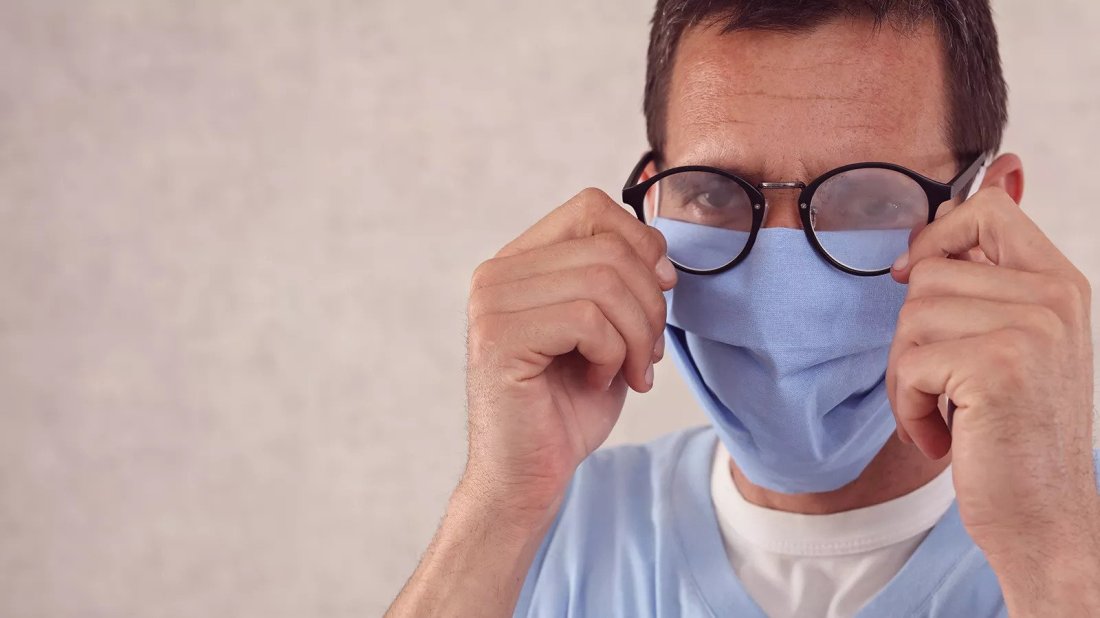
As much as it is important that we cover our face in public, people with glasses find it even more difficult as the lenses get fogged up causing clouded vision. 

The face mask does not give an outlet to your warm breath which causes the hot air to escape from the gap between your mask and your nose leading to misted up lenses. Being an  eyewearer myself, I know how frustrating it can be. 

If you are also fed up of wiping off your glasses and fixing them again and again as the moisture causes them to slip-off your nose, I have got some tricks up my sleeve that you can try as well. We all want to be safe but that does not mean that we have to give up our comfort. 

Here are some tips to keep your glasses fog-free even when you’re wearing a mask:

1. Use masks with a nose bridge

If your mask is loose on your nose, there will be enough gap for your breath to escape upwards to your glasses. Buy masks that have flexible nose bridges so they fit firmly on your nose.

It will prevent your breath from reaching your lenses while also giving you a better protective gear. 

2. Use soap and water

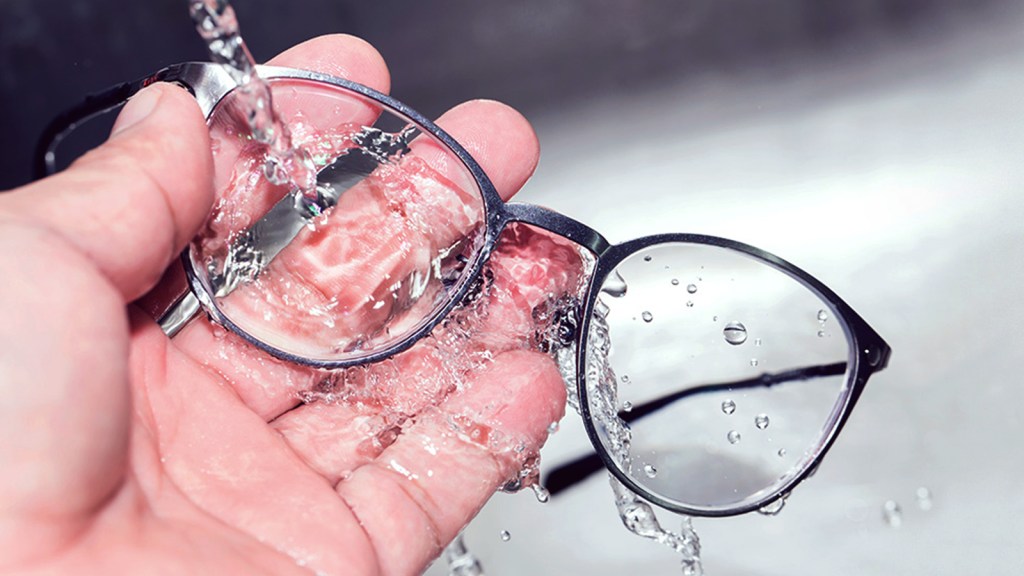
The solution to foggy glasses doesn’t get any simpler. Before you put on your eyewear, wash the lenses with soapy water and wipe away the excess moisture. Clean the lenses with a microfiber cloth or let them air dry.

Washing your lenses with soapy water will leave a thin film on them that will prevent water molecules to form on their surface.

3. Tighten your mask with ear loops

You don’t have to buy a tight fitting mask, you can simply adjust it as per the width of your face. If the ear loops are too big, twist them forming an ‘X’ shape and then put on the mask. There are also self-tying face masks that you can adjust yourself so that they fit close to your face. But do not tie it so hard that it causes redness behind your ears.

4. Secure your glasses

It is really annoying when our eyeglasses slip down our nose due to moisture. And the rush to sanitize your hands first before you secure your frames back again is a whole different story. Let me tell you how you can avoid this situation. How about you wrap the strings of your masks around your frame’s temples? 

If your frames are constantly slipping down, it could be that they are slightly bigger for your face. Wearing glasses that sit perfectly on your face will keep you away from this trouble. If you have been sporting the same frame for a long time and want a new one, you can buy glasses online to save the cost and choose from a wide variety of frame shapes and designs. Or, if you want to make do with the existing pair, go to your local optician and have it fixed.

5. Breathe downward

You won’t have to readjust your mask everytime if you change your breathing habit. To keep your glasses from fogging up, you can try breathing out downwards – Let me tell you how. Keep your upper lip over the lower lip and then exhale. 

It might seem awkward at first, but once you know how to do it right, it is one of the easiest solutions to keep your lenses moisture-free.